Sliding Shingles
Sliding shingles can result from improper fastening. Steeper slope roofs are more susceptible to this condition. Two problems with fastening are typically associated with this condition.
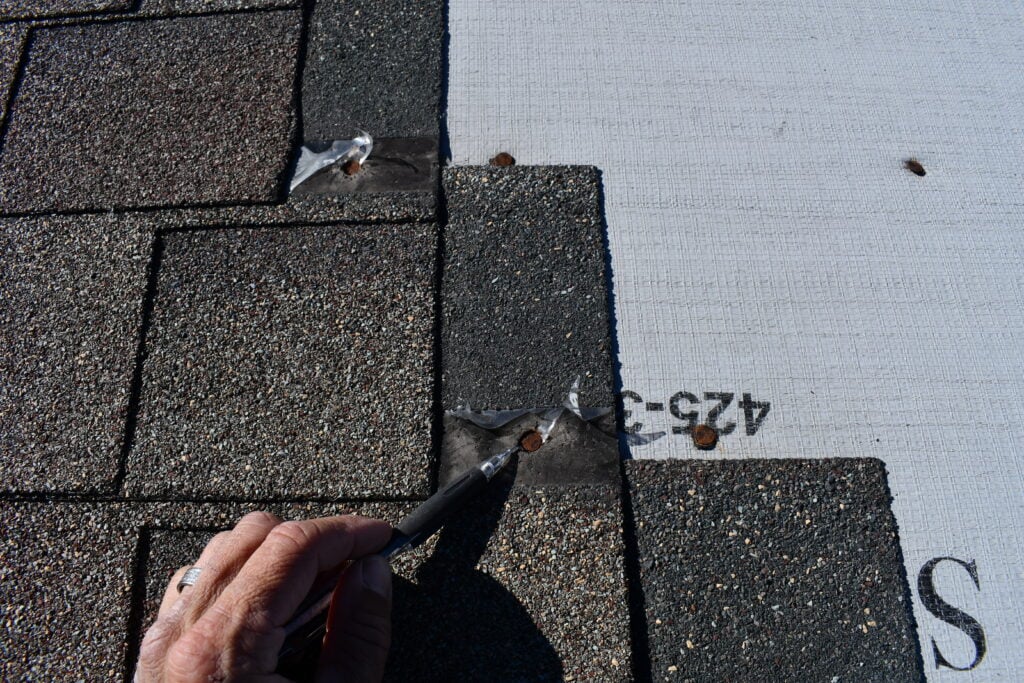
Overdriven nails result in the nail heads penetrating or partially penetrating one or both layers of shingles. This results in less shingle material or damaged shingle material being fastened, and thus reduces or eliminates the capacity of the fastener.
High nailing is another condition that can result in sliding shingles. When nailed correctly, each nail penetrates two layers of shingles. The upper shingle is fastened about mid-height, and the underlying shingle is fastened near the top. If the nails are installed too high, they can miss the top of the underlying shingle and thus provide no support to it.
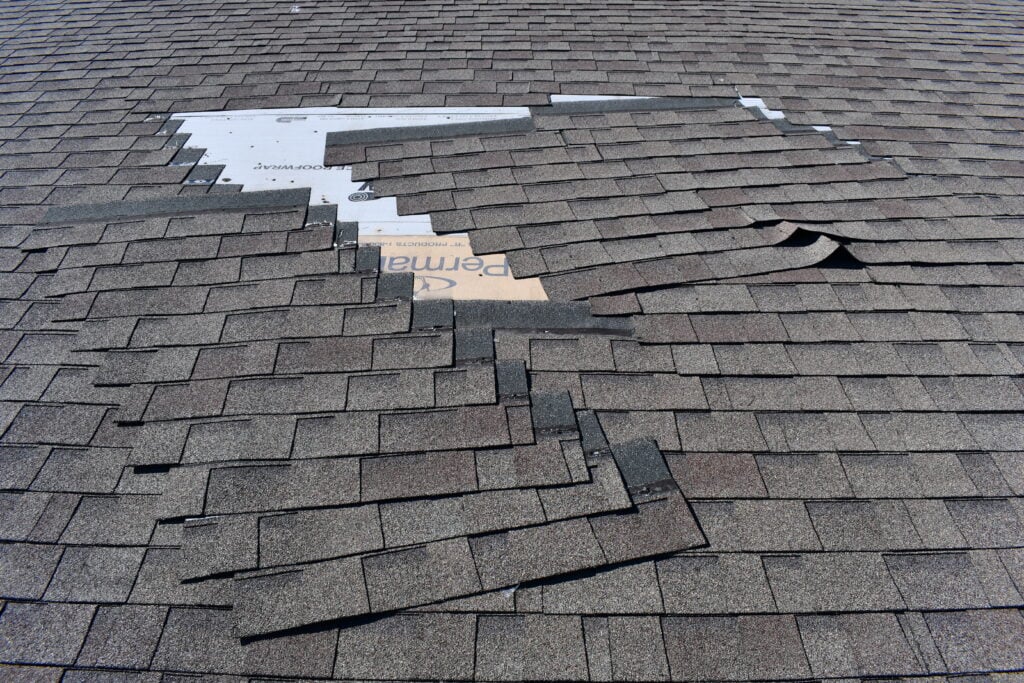
A properly driven shingle nail will result in the underside of the nail head securing but not damaging the shingle. Improper fastening of the shingles are susceptible to downslope displacement under the long-term effects of gravity and thermal movements. The photograph below shows sliding shingles:
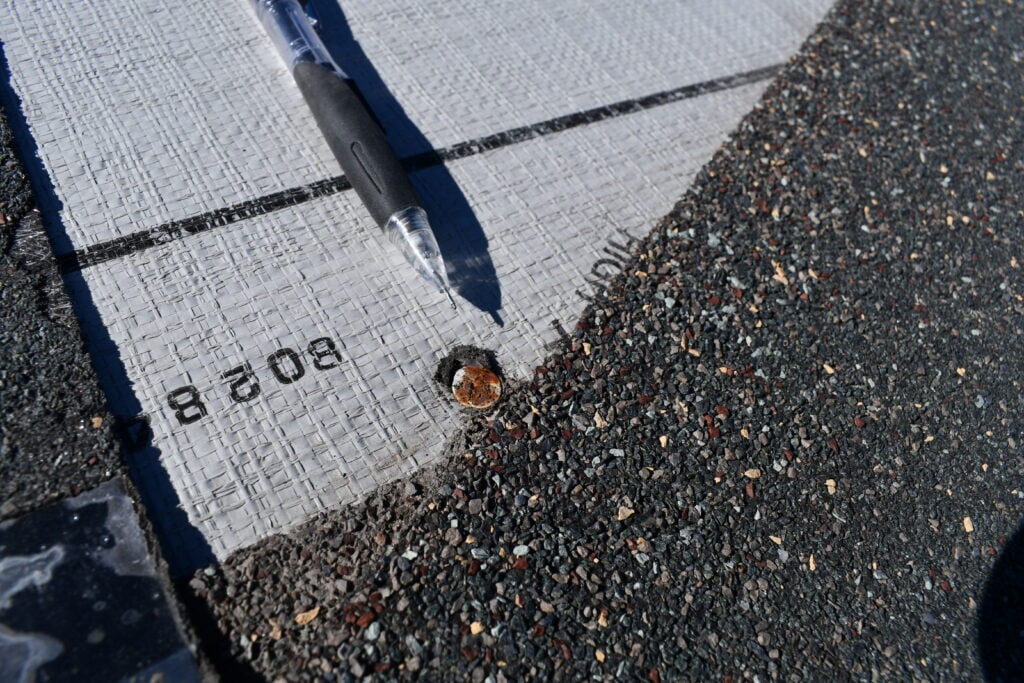
The next photograph shows a shingle nail that was overdriven and high-nailed. Note the head is flush with the underlayment below the shingles, and the crushed upper shingle material still attached to it. Also note its placement about a half inch above the underlying shingle.
The next photograph below also shows multiple shingle nails that were overdriven and high-nailed. Also note the corroded condition of the exposed nail heads: