Cracks
Cracks are commonly found in most buildings. A crack can be defined as a separation or fracture in a material, resulting from stress that exceeds the material’s capacity to resist it. This definition applies broadly, from microscopic cracks in metals or hairline fractures in concrete, to wide and obvious separations in wood, concrete, drywall or other common building materials. The causes, characteristics, and implications of cracks vary depending on the material and other factors involved.
Different materials vary in their susceptibility to cracking, but are mostly influenced by their mechanical properties. Brittle materials, such as glass, ceramics, and concrete in many cases, are prone to cracking because they have limited ability to deform before breaking. When subjected to stress, brittle materials tend to fracture suddenly rather than squeeze, bend or stretch. In contrast, more ductile materials like steel or wood can deform, making them less likely to crack under similar conditions.
Understanding the causes of cracks also involves determining their location, geometry and movement(s). Crack width is one of the most straightforward characteristics. This refers to the physical opening measured directly across the crack. This can range from barely visible cracks to wide separations that may indicate structural distress. However, crack width alone does not fully describe the movement behavior of a crack. Differential movement across a crack can be equally or even more important, and this can occur in two additional directions. Longitudinal differential movement refers to displacement of one or both sides of the crack parallel to the length of the crack. Vertical differential movement involves one side of the crack displacing up or down relative to the other side. These conditions can point towards underlying cause(s) such as settlement, thermal or moisture movements, applied loads, etc.
Another important aspect in assessing cracks is their age and progression. Physical characteristics can help determine whether a crack is recent or has been present for a longer period of time. Worn or rounded edges typically indicate that a crack has existed for longer, as exposure to harsher environmental conditions can gradually wear exposed surfaces. In contrast, sharp, clean edges may indicate a more recent condition. Paint can also provide useful information. Paint found within the crack on fractured surfaces indicates that the crack occurred before the last painting. Conversely, paint that is split along the crack line and not found within the crack indicates that the crack occurred after the paint was applied.
In summary, cracks are more than simple breaks in materials; they are potential indicators of stress, material behavior, and structural conditions. By understanding how cracks form, how different materials crack in respond to stress, and how to interpret their characteristics, it is possible to determine their cause and significance. This knowledge is essential in field of forensic engineering.
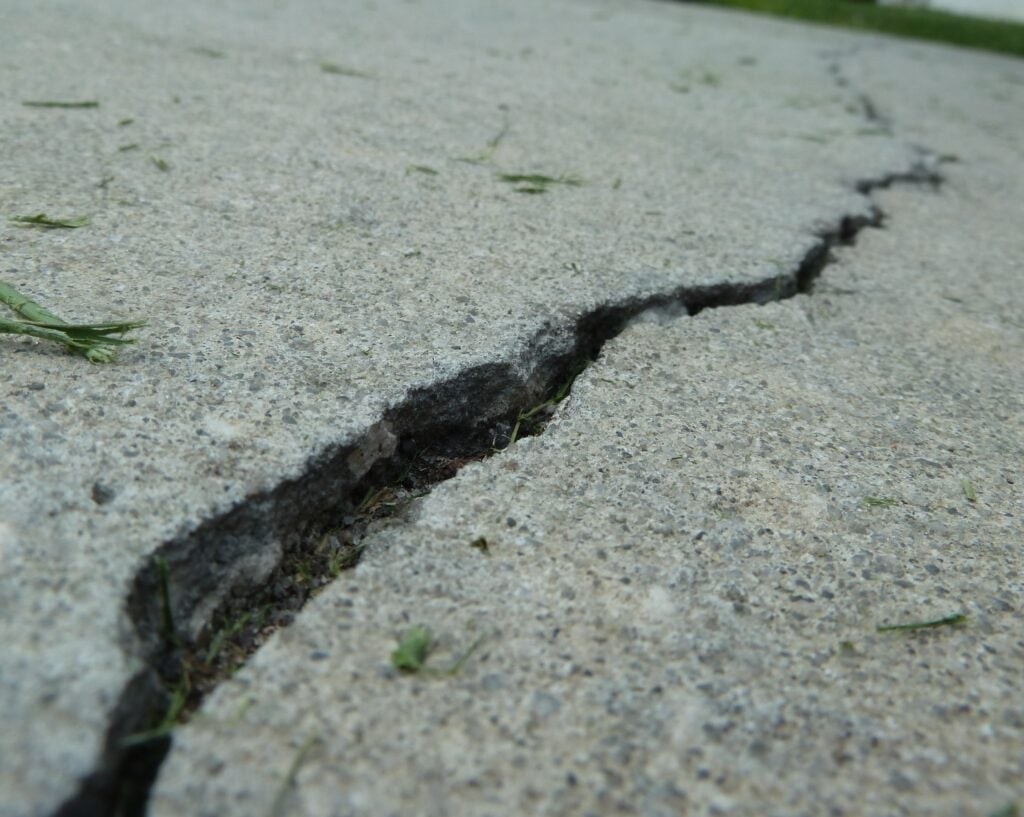
The photograph below shows differential vertical movement, soiled and worn edges, and debris inside a crack across a concrete driveway: