Flashing Failures
Flashings are applied at joints, intersections, and roof penetrations and are intended to prevent water intrusion. They are often concealed and made of sheet metal, membrane, or another waterproof material. Roof penetrations include plumbing ventilation pipes, chimneys, electrical masts, attic vents, skylights, etc. Intersections and joints include valleys, roof-wall interfaces, crickets such as those found behind chimneys, etc. Flashings failures are probably the most common cause of roof leaks, as roof leaks at the field of a roof (areas without specific flashings) occur less frequently. Flashing installation require careful selection of the proper materials and skilled workmanship in order to avoid future leaks.
Roof flashing may fail for reasons such as improper installation or material, differential movement, long term exposure, and severe weather. Long term deterioration of flashings and sealants can eventually lead to a flashing failure, regardless of the quality of materials or level of workmanship.
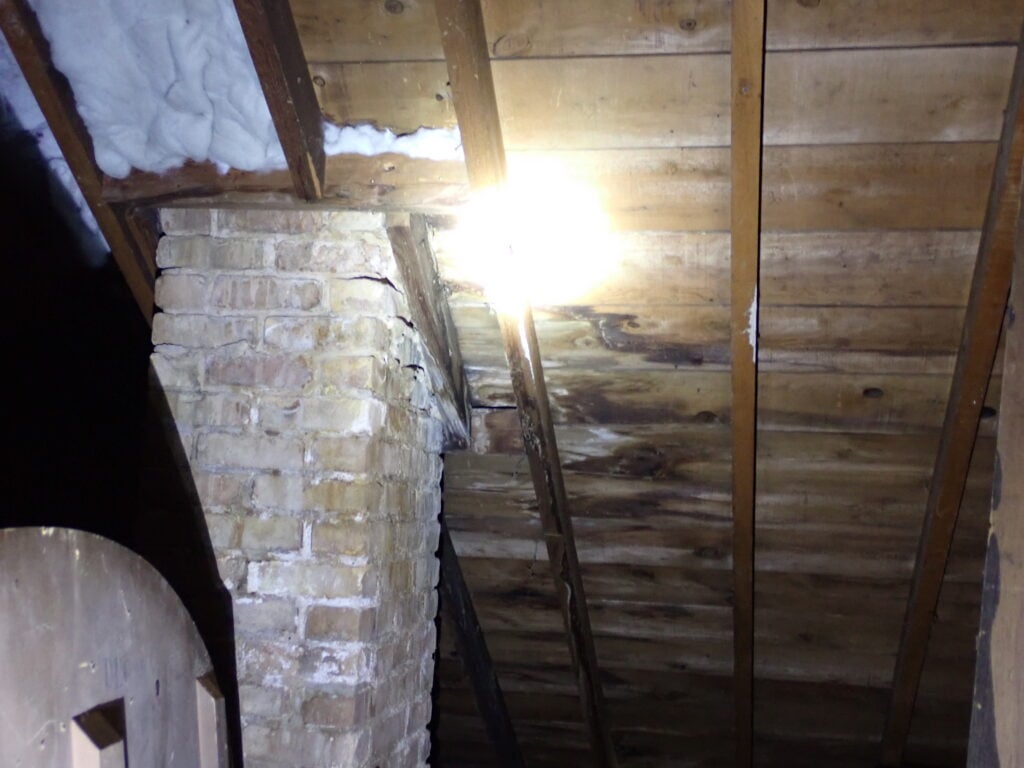
The specific cause of a flashing failure is often not visually obvious. Also, the particular flashing installation method, materials used, and the conditions of the materials may be indeterminate without destructive testing. Such testing typically includes at least the partial removal of roofing material, flashings, wall sidings, etc. Short of this, the diagnosis may be limited in its degree. In any case, the source (location) of the leak should be identified as accurately as possible. This usually means physically accessing the attic, if existing, and if possible examining the underside of the roof and the top side of the ceiling. Stains and rot at roof sheathing immediately adjacent to and below a chimney penetration is good evidence of a flashing failure at the chimney.
The photograph below shows attic stains and deterioration on a roof deck and rafter adjacent a chimney. Ceiling stains exist in the living space beneath this location: