Loose Mechanically Fastened Roof Tiles
Mechanically fastened roof tiles are also sometimes considered ‘loose’ because they are secured by mechanical fasteners (usually one or two) at their top edge only. An adjacent tile edge typically overlies one edge of any individual tile. However, the limited weights of the adjacent tiles and leverage provided by the length of the tile typically allows for some movement when a relatively limited upward force is applied to the bottom edge of the tile.
This possibility of movement is normal and the proper condition of properly installed mechanically fastened roof tiles. When roof tiles are installed with screws or nails (mechanical fasteners) the fastener heads should not be driven flush with the top of the tile because doing so does not allow the tile to expand and contract due to environmental effects. In addition, it may cause the unsupported end of the tile to lift and be more susceptible to wind. The Roofing Handbook by Robert Scharff and the editors of Roofer Magazine states the following:
“Do not drive home fasteners or draw the tile. Drive fasteners to a point where the fastener head just clears the tile so that the tile hangs on the fastener. When tiles are fastened too tightly, they lift up at the butt. This allows high winds to blow them off the roof or to blow water under them.”
Similarly, Traditional Clay Tile Roofing – Investigation and Rehabilitation by Nicholas Piteo and Niklas Vigener states “Mechanical fasteners must be installed to achieve sufficient deck penetration but should not strain the tile, which can cause breakage. Clay tiles should “hang” from the fasteners to allow some movement” The NRCA makes a similar point.
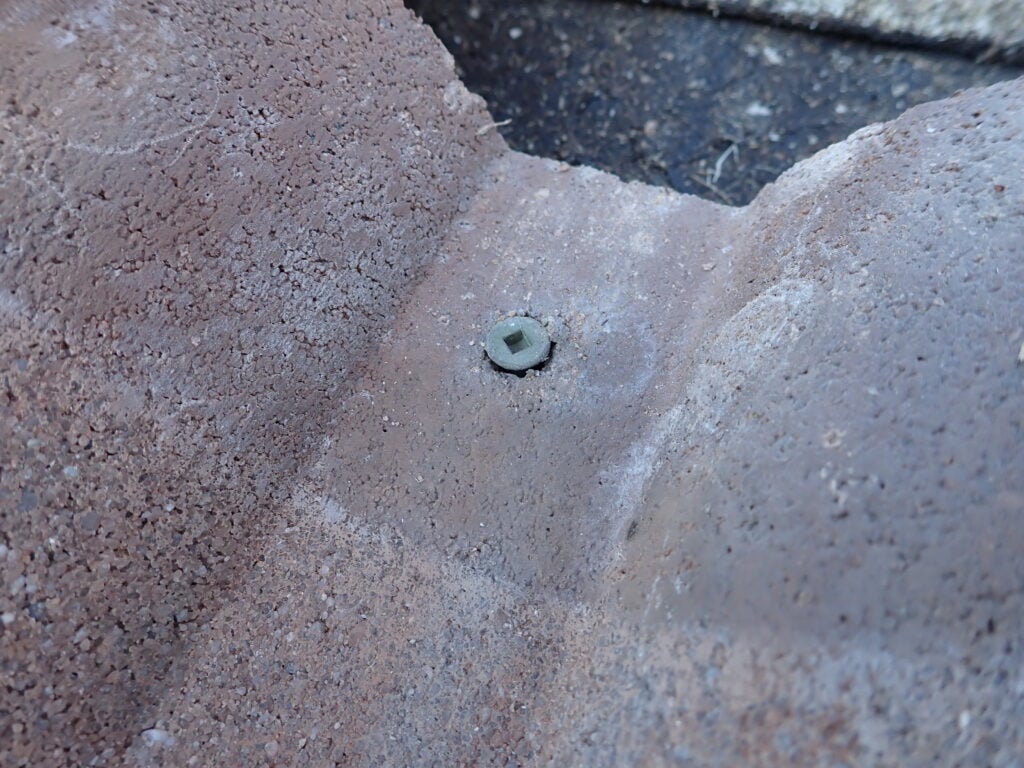
The photograph below shows a properly fastened tile. The screw head just offsets the tile:
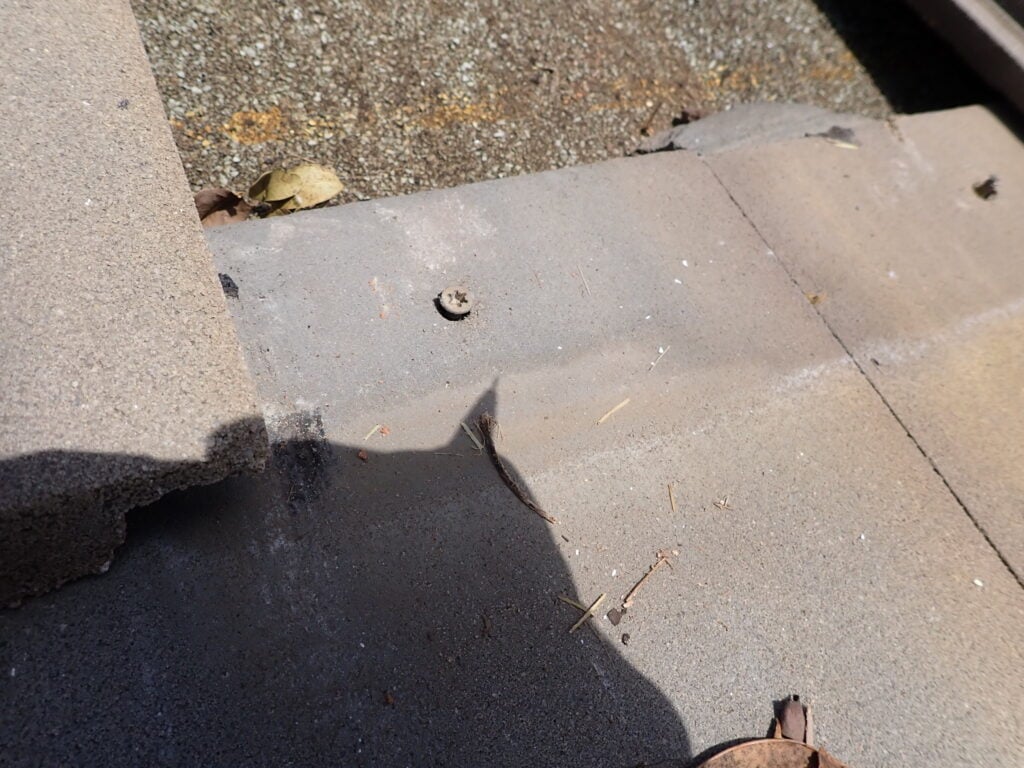
The fastener visible in the photograph below was driven tighter against the tile: