Frost Heave
Frost heave is a potential cause of building damage in colder climates. It occurs when water in the soil beneath or around a building’s foundations freezes and expands. This problem is more severe in soils that permits capillary action, such as silts and clays. When temperatures drop sufficiently, water in the soil freezes. If conditions are right, ice lenses can form. These are horizontal sheets of ice that can grow as capillary action from below allows additional water to rise and freeze, adding to the ice lenses. The accumulating ice lenses beneath or adjacent to a buried foundation can exert enormous pressure, causing frost heave damage.
An effective method to prevent frost heave is to place footings below the local frost depth. This depth is typically about 48″ in lower 48 northern states, but can vary up to 80 inches depending on local conditions, building codes, and building department requirements. The idea is to place the bottom of the footing deep enough so that the ground does not freeze beneath the footing.
Insulated footings are another potential solution, especially for shallow foundations. Frost-protected shallow foundations typically use rigid insulation sheets (often extruded polystyrene) placed beneath and adjacent to the foundation. The insulation helps retain geothermal heat in the ground, preventing the cold above from causing the ground to freeze. This method can reduce excavation and material costs while still protecting the building. Whether using deep or insulated footings, the goal is the same: prevent freezing soil from lifting or otherwise displacing the foundation.
Exacerbating factors that can contribute to frost heave include poor surface drainage, silty or clay soils, and a nearby source of groundwater. Surface drainage problems could include poorly directed roof gutters and ground sloping towards a building. An underground spring or nearby body of water can provide the source for water to migrate towards growing ice lenses.
Once the weather warms, buried posts and concrete slabs affected by frost heave will usually return towards their original position, at least to some degree. This applies more to concrete slabs. The reason for this is that there is less potential for soil or other material to fill the gap created by the displacement, and thus make the displacement permanent. Wood posts affected by frost heave will often continue to move generally upward over the course of many years, as the ice melts and soil fills in the gap beneath the post.
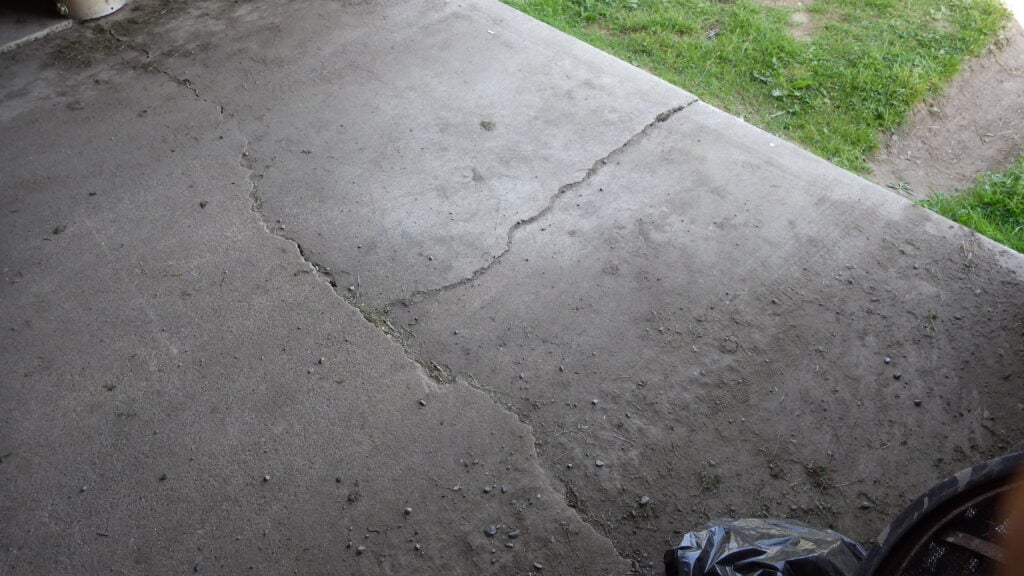
The photograph below shows frost heave at a concrete slab on grade: