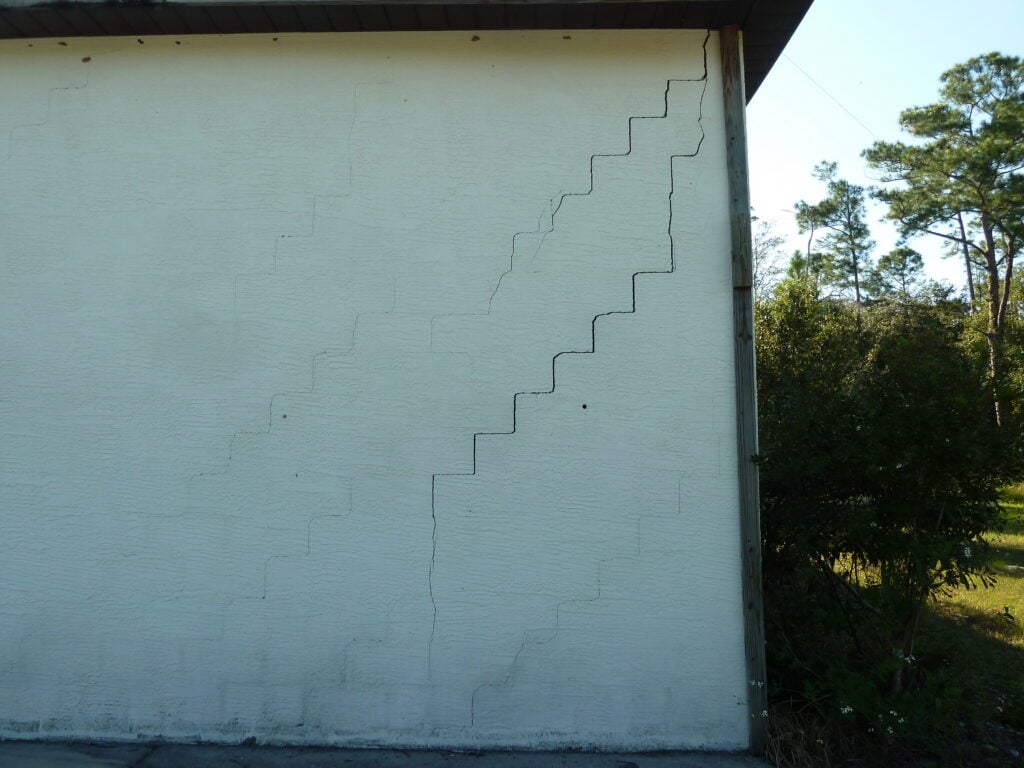
Settlement
Settlement occurs for a combination of reasons related to the preparation and compaction of the soil, which may include the presence of organic materials, the effects of vegetation, and the natural raising and lowering of the ground water table which contributes to the consolidation of soil over the years.
Foundations rely on uniform, stable support. Before construction, soil should be cleared, compacted, potentially evaluated for capacity and even excavated and replaced. The presence of loose or contaminated soil or organic material can result in the soil compressing under load more than it otherwise would have. This can result in a loss of support for the supported foundation sufficient to cause downward displacement as the soil compresses. The loss of soil beneath a foundation or slab from erosion or other factors can also lead to settlement.
Differential settlement is a primary concern. This is when one part of a structure settles more than another. Uniform settlement may lower a building without otherwise damaging it, but differential movement usually results in cracks, separations, and other damages as one component displaces relative to another.
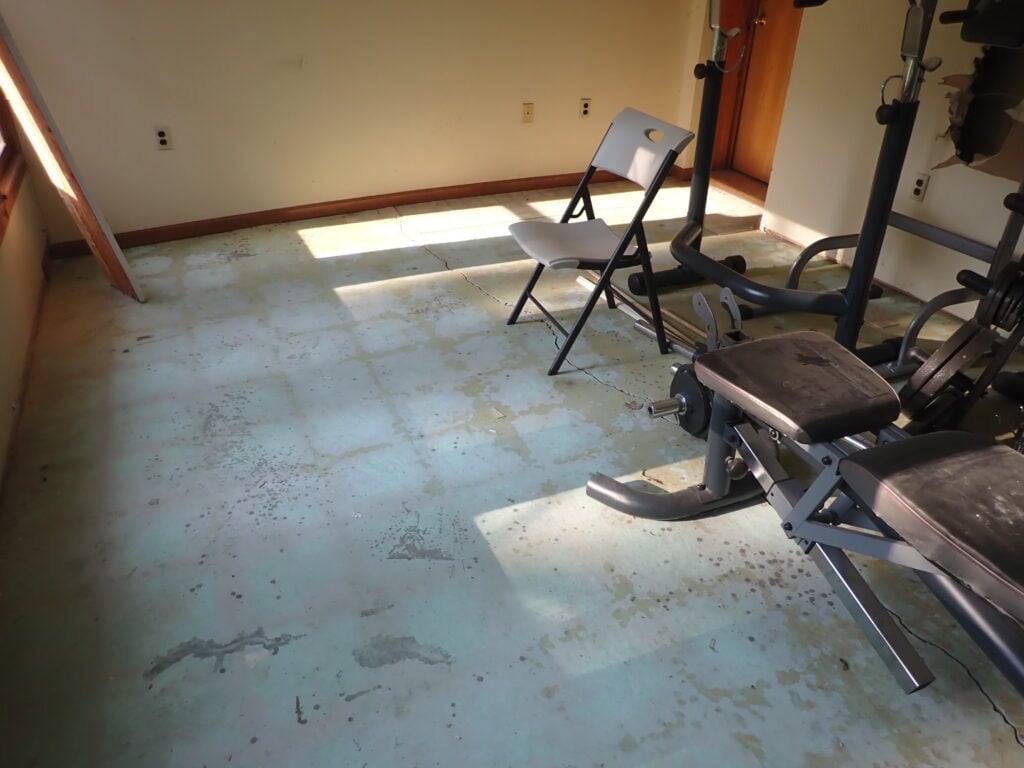
In the photograph below, the slab to the left of the crack has settled. This resulted in the bow visible on the far baseboard.
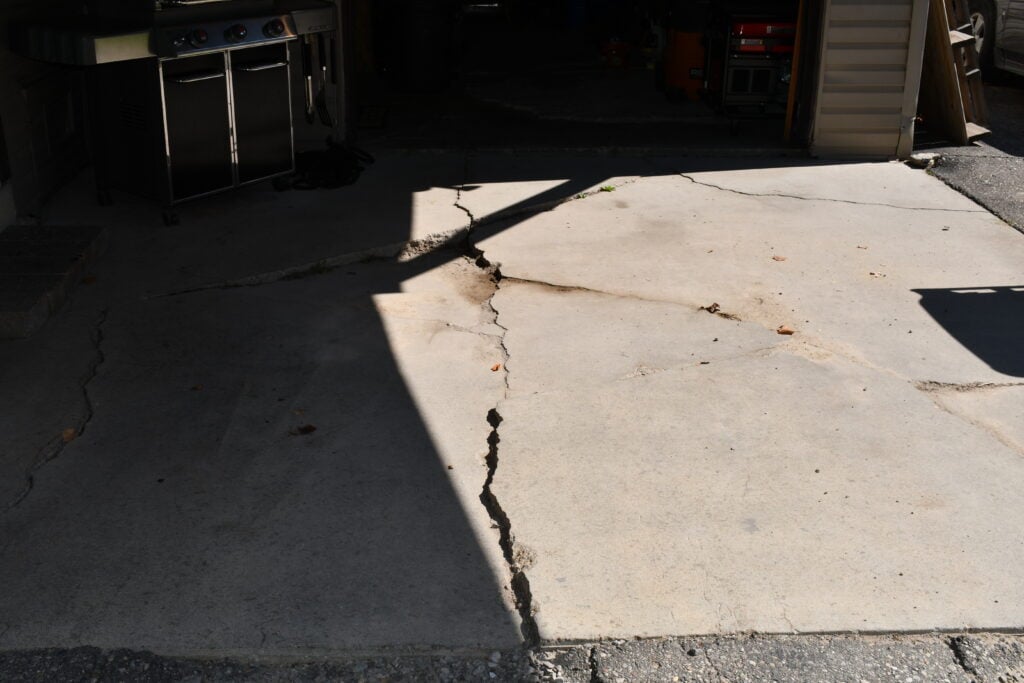
The driveway slab below is affected by both frost heave and settlement:
Classic settlement cracking visible near the corner of a CMU building in the photograph below: